
32 Guides found
 Overview
IndyKite at a Glance: Products Overview
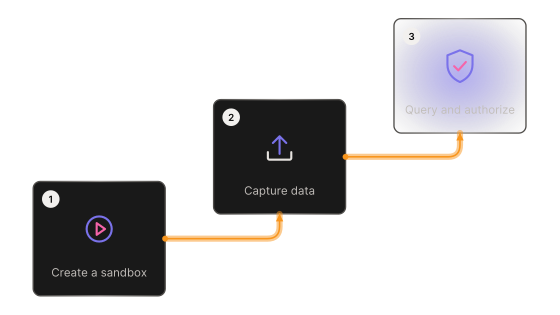
What IndyKite does, in two minutes: one picture of the platform, every product in one map, which product answers which need, and the four steps to a first result.
 Environment
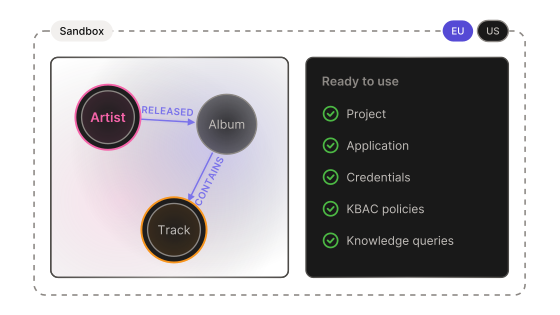
Get started with the Sandbox
How to use the IndyKite platform: connect your data, create contextually relevant queries and apply authorization policies.
 Environment
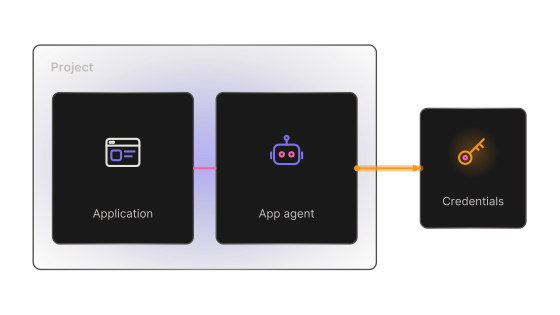
Creating an IndyKite Environment
Understanding the platform hierarchy and what components are needed to integrate with IndyKite.
EnvironmentEnterprise Single Sign-on (ESSO): Sign In to the Hub with Your IdP
How to set up Enterprise Single Sign-on so your team signs in to the IndyKite Hub with your own identity provider.
 Token Introspect
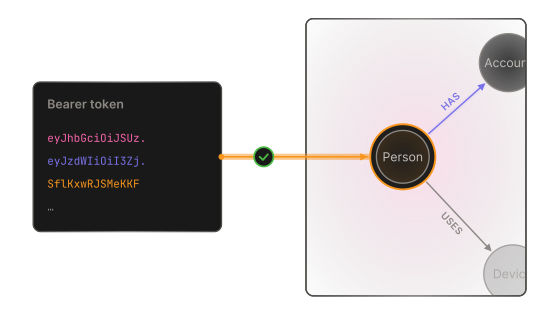
: Validate External Identity Tokens
What is needed to configure Token Introspect for the IndyKite platform.
EnvironmentCredentials, Tokens and API URLs
What credentials, tokens and URLs are needed for the IndyKite platform.
EnvironmentCreate Terraform configurations in the IndyKite platform
How to use the IK Terraform plugin to create configurations in the IK platforms.
 KBAC
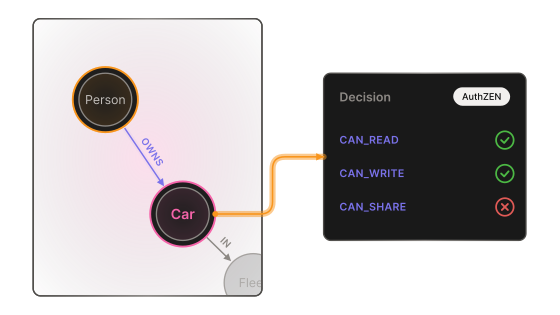
AuthZEN: Authorization Decisions on the Knowledge Graph
How to ask IndyKite for an authorization decision with the AuthZEN REST API: single and batch evaluations, subject, resource and action searches, the tokens involved, and the KBAC policies that produce the answer.
EnvironmentConfig API conventions
The rules every Config API resource follows: authentication, identifiers, list filters, reads by name or version, ETags, update semantics, statuses and the error contract.
KBACHow Knowledge Graphs power dynamic authorization?
What Knowledge Graphs, KBAC and IndyKite are bringing to dynamic authorization
 ContX IQ
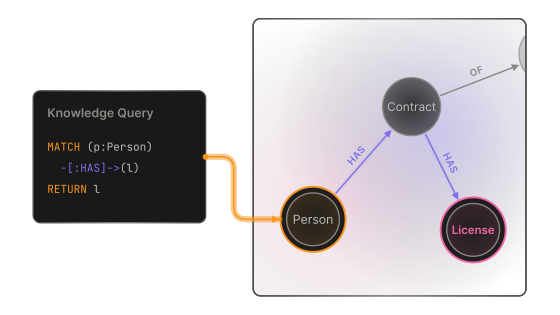
: Context-Aware Data Queries and Policies
ContX IQ (CIQ): authorize and run graph reads, writes and deletes on the IndyKite Knowledge Graph with a CIQ policy (1.0-ciq, or 2.0-ciq for CIQ v2), a Knowledge Query and POST /contx-iq/v1/execute.
 Data Schema
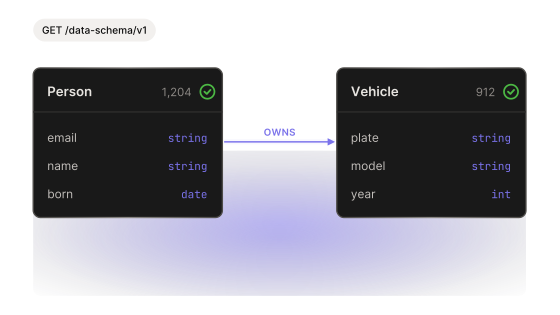
IKG Data Schema and Capture API: Shape, Write and Read Your Graph Data
How data is shaped in the IndyKite Knowledge Graph - nodes, relationships, properties, metadata - how to write and delete it with the Capture API, and how to read your project's schema back through the Data Schema API.
 Audit Log
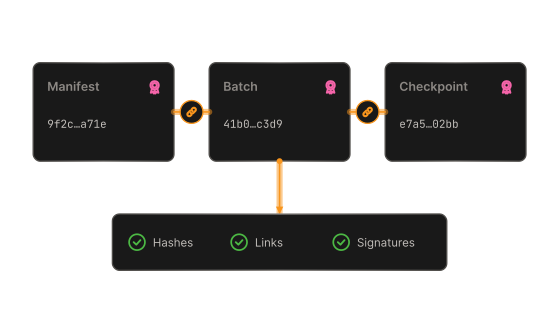
 API: Read and Export the Tamper-Proof Audit Trail
Page through your project's signed audit-event batches, the chain manifests that link them, and the signed checkpoints with the Audit Log REST API, fetch the public signing keys, and check an export independently of the platform.
Audit SigningAudit Signing: Control the Key That Signs Your Audit Records
Configure who manages the signing key for your project's audit records - the platform, or your own key in GCP KMS, AWS KMS, or Azure Key Vault - via the Config API.
ContX IQCypher for ContX IQ: Policy and Knowledge Query Patterns
How to write the Cypher used in CIQ policies and Knowledge Queries - the Neo4j-adapted dialect, its rules, and worked examples.
 External Data
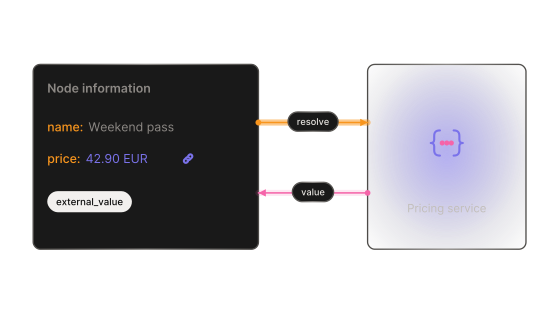
 Resolver: Fetch External API Data During Queries
How to configure External Data Resolvers and Data References to fetch data from external APIs during ContX IQ query execution.
EnvironmentWhy use a Graph Database?
Understanding why graph databases are essential for identity, authorization, and the IndyKite platform.
 Outbound Events
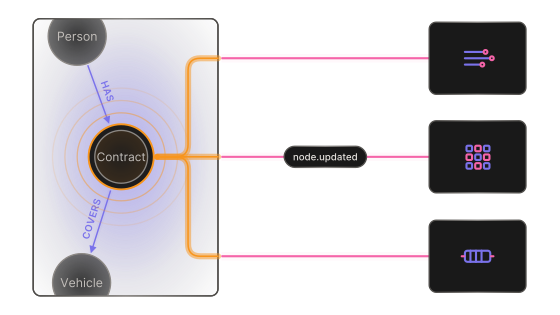
: Stream Graph Changes to Kafka, Event Grid, Service Bus, and Pub/Sub
What is needed to configure Events for the IndyKite platform.
Audit LogTamper-proof audit log: infrastructure for a dedicated deployment
What a dedicated IndyKite deployment needs in your GCP project or AWS account to run the tamper-proof audit log: signing and storage keys, the write-once bucket and its access log, the message bus, three identities with least-privilege permissions, the values to hand over, the one-way decisions and what to monitor.
EnvironmentData Residency & Composite Databases
Control where your Identity Knowledge Graph data lives: regions, replicas, routing data to specific locations with a composite database, and location-aware authorization with 3.0-kbac policies.
EnvironmentIndyKite Product Demos
Demos to configure the IndyKite platform and start using the different products.
 Entity Matching
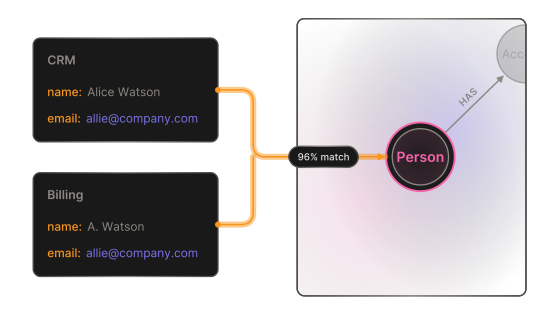
: Link Records That Describe the Same Entity
How to configure and run Entity Matching Pipelines that connect nodes describing the same real-world entity with a _SAME_AS relationship.
 Agent Gateway
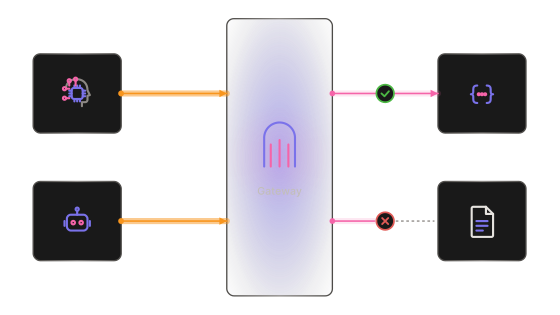
 Architecture: a checkpoint at every hop
The reference architecture behind the IndyKite Agent Gateway (IAG), explained on a working demo: one gateway in front of every agent and every data service, the four checks each gateway runs, why the decisions come from the knowledge graph, and how one request travels through the diagram end to end.
 Trust Score
: Assess Data Trustworthiness
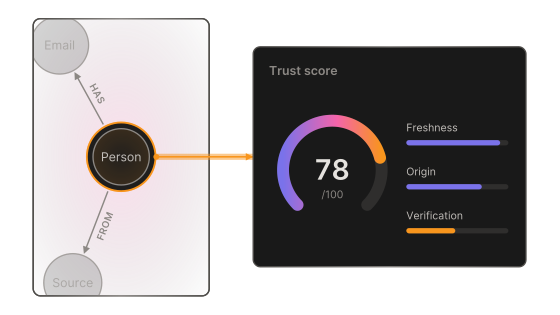
How to configure Trust Score Profiles to assess data trustworthiness based on freshness, origin, validity, completeness, and verification.
Agent GatewayAgent Gateway: Authorize Agent-to-Agent and MCP Calls
How the IndyKite Agent Gateway (IAG) decides whether an agent call may proceed, what to set up in your identity provider and your IndyKite project, how to configure, run and test one gateway, and how to read its responses and audit records.
Audit LogAudit Event Formats: Platform Events, Agent Gateway, Token Service and Intent Agent Records
The three audit record formats IndyKite components produce - the indykite.audit.* CloudEvents of the platform with the payload fields of every event type, the shared record of the Agent Gateway and the Token Service, and the record of the Intent Agent - with examples, file layouts, how to tell them apart and how to correlate them.
 MCP
How to use the MCP server?
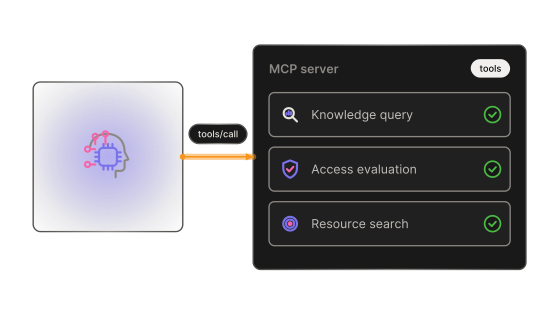
Connect AI agents to IndyKite through the Model Context Protocol: create the MCP server configuration, authenticate with a Bearer token, then make AuthZEN decisions and run each Knowledge Query as its own tool, on the session-based or the stateless protocol.
Agent GatewayIndyKite Token Service: mint delegation tokens for agent chains
Run the self-hosted IndyKite Token Service (ITS): an RFC 8693 token exchange and RFC 7662 introspection service that mints the delegation token the Agent Gateway forwards in X-IK-Token, so policies can see the whole chain of agents acting for a user.
 Agent Gateway
Intent Agent: turn a prompt into AuthZEN evaluations
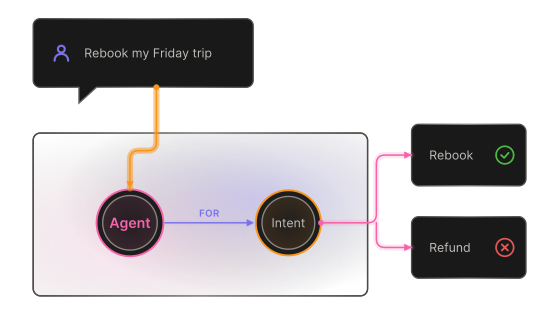
The IndyKite Intent Agent reads a natural-language prompt and answers with what it asks, as AuthZEN subject, action, resource and context entries, in the vocabulary of your knowledge graph and active KBAC policies. What to send, what comes back, how to get a decision from it, and a demo to try.
Agent GatewayIBAC Engine: Intent-Based Access Control in the Agent Gateway
How intent-based access control (IBAC) works in the IndyKite Agent Gateway: the intent of a prompt, the coarse authorization mappings an A2A agent or an MCP server declares on its skills, tools, resources and prompts, how the IBAC engine matches one against the other in discovery and in usage, the AuthZEN requests it derives, its reason codes and its audit records.
Agent GatewayDelegated token package: carry X-IK-Token through your agents and MCP servers
Use the indykite-delegated-token Python package in an MCP server or an A2A agent behind the Agent Gateway: read the delegation token of the request being handled, and send it on to the next gateway so a multi-hop workflow is not refused.
MCPUse IndyKite from your AI coding agent
Install the IndyKite skills bundle so Claude Code, Gemini CLI, and other coding agents can author ContX IQ policies, call the MCP server, and deploy Agent Gateway against your project - from a single prompt.